Launch Your Charcoal Brand: 15-Country OEM Guide
▶ Learn more about our Vinachaki charcoal: Video
There is a very distinct smell to raw ambition. For many entrepreneurs sitting in high-rise offices, it smells like freshly printed business cards or the sterile, conditioned air of a new boardroom. But for me, and for the incredibly dedicated team here at Vinachaki, ambition smells vastly different. It smells like rich, caramelized wood smoke. It smells like the intense, radiating heat of a retort kiln operating at three in the morning. I have spent the better part of my life standing on dusty factory floors in Vietnam, holding pieces of newly carbonized timber in my calloused hands, watching dreamers walk through our facility doors with nothing but a brand name sketched hurriedly on a paper napkin.
They come to us asking about charcoal OEM and private labeling, but I know what they are really asking. Beneath the inquiries about pricing, minimum order quantities, and shipping logistics, they are asking: Can you help me build my legacy? Can you manufacture a product that I will be proud to put my family’s name on?
Over the past decade, Vinachaki has evolved from a humble local production facility into a trusted global manufacturing partner. We have successfully exported our custom carbon products to over 15 countries worldwide, navigating some of the most complex supply chains imaginable. But I am not writing this article to hand you a polished, soulless corporate brochure. The internet is already full of those. Instead, this is a sincere, unflinching, behind-the-scenes look at the sweat, the occasional tears, and the relentless engineering required when you decide to launch your charcoal brand.
I want to share our authentic journey with you. I want to tell you about our grueling, borderline heartbreaking battles to conquer the strict European markets, and show you exactly what it takes to turn raw, sustainable Vietnamese biomass into a premium global commodity. If you have ever stared at a bag of generic, foul-smelling briquettes at your local supermarket and thought to yourself, “I could do this better,” then I invite you to pull up a chair. Let me tell you the real story of global manufacturing.
The Dangerous Illusion of Simple Private Labeling
When aspiring business owners first begin researching the manufacturing world, they often stumble upon a very dangerous illusion. The internet, flooded with dropshipping gurus and quick-money schemes, makes it sound incredibly simple. The narrative goes like this: you find a random factory overseas on an Alibaba directory, you email them a PDF of your logo, they slap it on a brown paper bag, and suddenly, you are ready to launch your charcoal brand and conquer the market. I have personally seen countless passionate people lose their life savings to this exact misconception.
The harsh reality of charcoal OEM and private labeling is exponentially more complex. Charcoal is not a passive, static product like a plastic phone case or a cotton t-shirt. Charcoal is a volatile, living commodity. It interacts aggressively with its environment. It absorbs moisture from the humid ocean air during a 40-day maritime transit. It expands and shatters if the mechanical extrusion pressure during briquetting isn’t perfectly calibrated to the millimeter. It sparks violently and ruins expensive cuts of meat if the raw material contains even trace amounts of silica or uncarbonized tree sap.
At Vinachaki, we learned very early in our journey that being a contract manufacturer means holding someone else’s reputation in our hands. If a bag of our charcoal fails to ignite during a Fourth of July family barbecue in Texas, or if it emits a foul, chemical odor in a Michelin-starred Yakiniku restaurant in Tokyo, the consumer does not blame the anonymous factory in Vietnam. They blame the name printed in bold letters on the bag. They blame your name.
That profound realization fundamentally shifted our entire business philosophy. We stopped acting like a simple volume supplier and transitioned into the role of brand guardians. We realized that to truly help someone launch your charcoal brand successfully, we needed a deep, almost obsessive understanding of the partner’s target demographic, their regional culinary culture, and their operational pain points. We realized we weren’t just filling bags with fuel; we were engineering culinary experiences.
The Crucible: Bleeding to Conquer the European Market
I want to be completely transparent with you about our failures, because that is where our true strength was forged. There was a time, several years ago, when we naively thought we had perfected our craft. We were producing high-heat, long-lasting sawdust briquettes that our domestic and regional Southeast Asian partners absolutely loved. Driven by early success, we confidently set our sights on the European market. I still vividly remember the first test container we tried to send to a distributor in Germany. It was a humbling, borderline devastating experience that forever changed the DNA of Vinachaki.
European buyers do not just want heat. They demand absolute, scientifically verifiable perfection. When you attempt to launch your charcoal brand in the EU, you are stepping into a formidable regulatory fortress. The barriers to entry are monstrous. We were suddenly faced with the infamous DIN EN 1860-2 standards. These are not mere guidelines; they are strict laws regulating the precise chemical composition, the maximum allowable ash content, and the specific ignition properties of barbecue charcoal. European laboratories tested our products for trace heavy metals and the exact percentage of uncarbonized wood, known as volatiles, with a level of scrutiny we had never encountered.
But the absolute hardest battle was sustainability. European consumers, quite rightly, possess a profound environmental conscience. They demanded to know exactly where every single tree came from. It wasn’t enough to simply print “sustainably sourced” on the packaging. We had to prove it through rigorous chain-of-custody audits. This led us down the crushing complexity of obtaining global forestry certifications and navigating the European Union Deforestation Regulation.
To overcome this, I spent months living out of a battered suitcase. I traveled relentlessly between our modern factories in the city and deeply rural, mountainous plantations across Vietnam. We had to audit our supply chains down to the exact GPS coordinates of the soil where the timber grew. We had to completely overhaul our procurement strategy, ensuring that not a single branch of our raw material contributed to the degradation of natural forests.
Simultaneously, we realized our traditional kilns were not eco-friendly enough for this new standard. We invested massive amounts of capital into closed-loop retort kiln technology. Instead of releasing toxic methane and carbon monoxide gases into the atmosphere as waste, our new systems capture these highly combustible gases and redirect them back into the furnace to fuel our own fires. This drastically reduced our carbon footprint.
We bled for those certifications. We lost sleep for months, we lost initial contracts because we refused to cut corners, and we spent absolute fortunes on compliance testing.
But looking back at it now, that European crucible was the greatest gift Vinachaki ever received. It ruthlessly stripped away our weaknesses and forced us to elevate our manufacturing standards to the absolute pinnacle of the industry.
Today, when a visionary founder sits across from me and says they want to launch your charcoal brand in strict, highly regulated markets like the UK, France, or Germany, we do not blink.
We already possess the sustainable infrastructure, the flawless compliance records, and the battle scars required to guide them safely through the regulatory minefield.
European Union Deforestation Regulation
The 5-Step Masterclass Blueprint: How We Build Your Legacy
So, how do we actually execute this? How does a brand transform from a theoretical idea into a physical product dominating the shelves of a premium supermarket in Melbourne or an elite butcher shop in London? Through immense trial, error, and thousands of distinct production cycles, we have refined our charcoal OEM and private labeling services into a meticulous, uncompromising five-step blueprint.
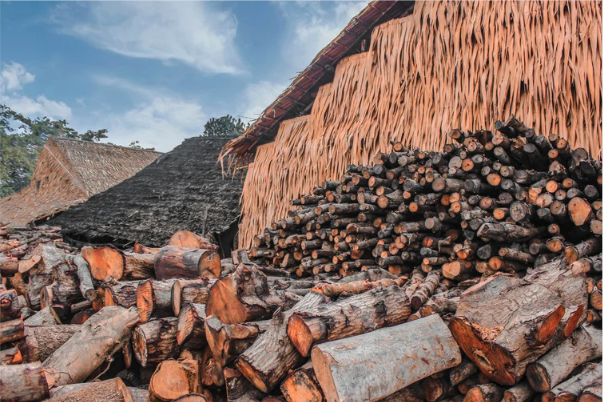
Step 1: The Biomass DNA and Deep Culinary Profiling
The journey to launch your charcoal brand begins long before the first fires are ever lit in our kilns. It begins with a deep psychological understanding of your end consumer. The very first question I ask any new partner is: “Who is holding the match?”
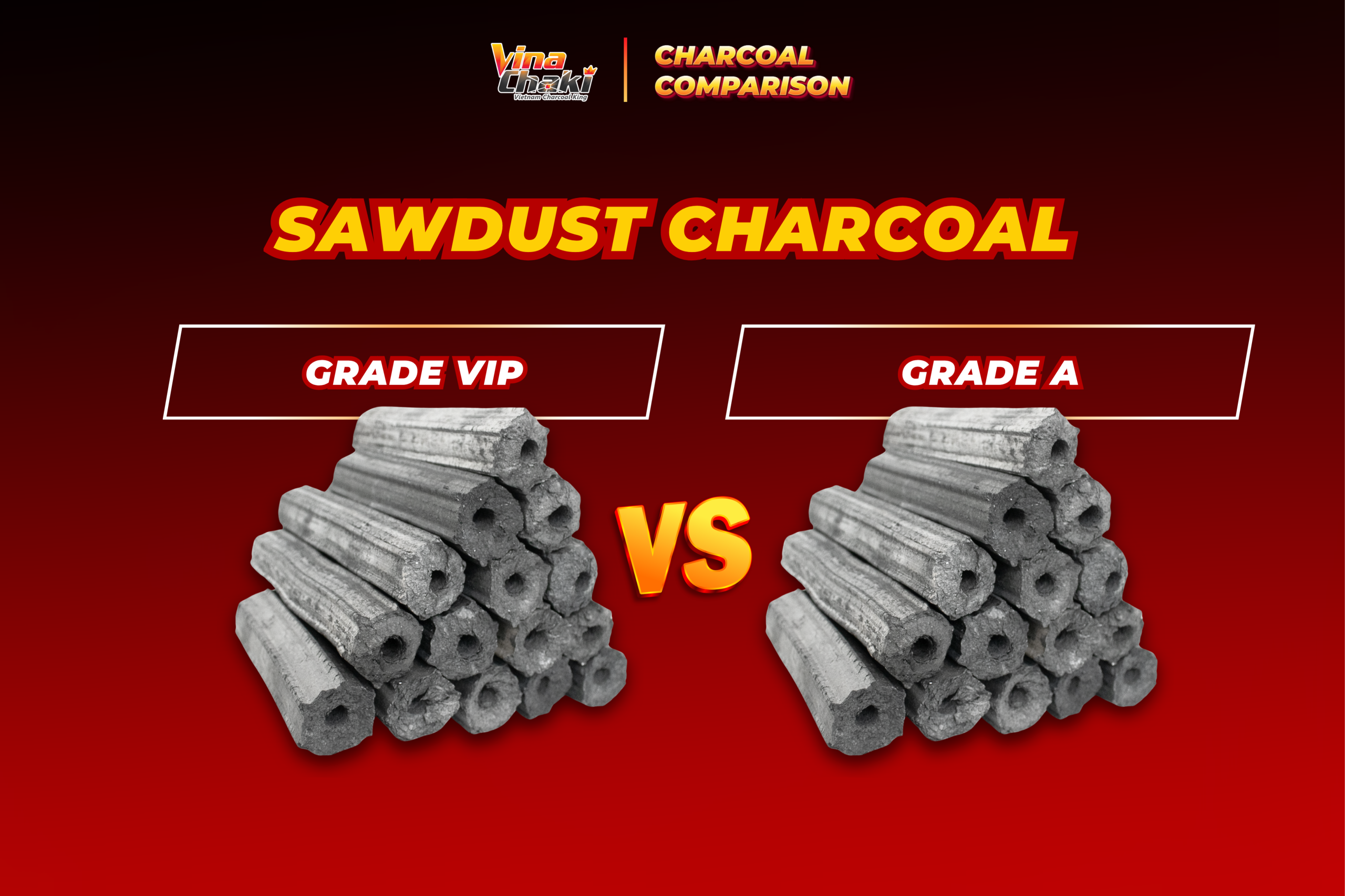
If your target market consists of high-end steakhouses utilizing heavy ceramic Kamado grills, they require extreme, sustained thermal output with a completely neutral flavor profile. They do not want the fuel to mask the flavor of a $200 dry-aged Wagyu steak. For them, we would recommend our ultra-dense Binchotan style charcoal or our high-compression hexagonal sawdust briquettes, which burn with silent, invisible intensity.
Conversely, if you want to launch your charcoal brand targeting backyard barbecue enthusiasts in the American South—the pitmasters who wake up at 4 AM to slow-smoke a beef brisket for fourteen hours—they absolutely want flavor. We guide these specific clients toward curated hardwood blends, utilizing woods like longan, lychee, or coffee wood. These specific biomass types impart a sweet, robust, and deeply authentic smoke profile into the meat.
And if your vision is to dominate the luxury shisha and hookah market in the Middle East, the rules change entirely. Shisha charcoal must be entirely odorless, completely tasteless, and leave a pristine, structural white ash so it doesn’t fall into the tobacco.
For this, we exclusively utilize premium coconut shell charcoal, meticulously sifted multiple times to remove even microscopic impurities. Choosing the right biomass is like pouring the concrete foundation of a skyscraper. In our charcoal OEM and private labeling program, we never force a one-size-fits-all product. We architect the fuel at a cellular level to match your specific culinary narrative.
Step 2: Custom Carbonization and Thermal Engineering
Once we have selected the perfect raw material, we move to the beating heart of the entire operation: the carbonization process. This is the exact intersection where organic chemistry meets manufacturing art. To successfully launch your charcoal brand with a product that mathematically outperforms your competition, you need absolute thermal consistency.
Inside our facilities, we utilize highly advanced thermal sensors to control the internal heating curves of our retort kilns. We don’t just throw wood into a fire; we carefully and deliberately extract moisture, volatile organic gasses, and heavy wood tars over a highly specific time gradient.
The temperature control is everything. If a partner requires a consumer-friendly product that is exceptionally easy to ignite for casual weekend campers, we might program the kiln to stop the carbonization process slightly earlier. This leaves a tiny, perfectly safe percentage of natural wood volatiles inside the structure to act as a natural ignition aid.
On the other hand, for professional culinary brands demanding zero smoke and a fixed carbon content exceeding 85%, we push our kilns to extreme temperatures, often hovering around 1000 degrees Celsius. We bake the carbon for days until it becomes so dense and purified that it actually rings with a metallic clink, like glass, when struck together.
This relentless level of thermal engineering is the secret weapon of our charcoal OEM and private labeling service. It guarantees that container number one burns with the exact same thermal profile as container number one hundred, fiercely safeguarding your brand’s reputation for reliability.
Step 3: Structural Integrity and Rigorous Climate Adaptation
Here is a harsh, expensive truth that many aspiring brand owners learn the hard way: charcoal is incredibly fragile. When you launch your charcoal brand and begin shipping it halfway across the globe, that product is subjected to violent ocean swells, extreme temperature fluctuations inside steel shipping containers, and rough handling by hurried forklift operators.
We recognized this critical vulnerability early in our history. At Vinachaki, our R&D team developed proprietary natural binders—derived strictly from food-grade plant starches like cassava—combined with extreme high-pressure extrusion techniques for our briquette lines.
This mechanical engineering prevents the charcoal from shattering into useless, unsellable dust during a turbulent 40-day maritime voyage to South America or Northern Europe.
Furthermore, we adapt our processing metrics based on the final destination’s specific climate. This is crucial. A container of charcoal heading to the sweltering, humid environment of Florida requires entirely different moisture control parameters at the factory level than a product heading to the bone-dry heat of the Arizona desert. We bake climate resilience directly into the product.
Step 4: Packaging Architecture and The Psychology of Unboxing
You can manufacture the absolute greatest, highest-heat charcoal in the world, but if the packaging looks cheap, flimsy, or generic, nobody will ever buy it to find out. Packaging is the silent, 24/7 ambassador of your brand on the retail shelf. Because we understand this, our charcoal OEM and private labeling division includes an entire team dedicated solely to packaging architecture.
When you partner with us to launch your charcoal brand, we don’t just ask for a vector file of your logo. We engage in deep discussions about the tactile feel of the paper. We explore heavy-duty, multi-layered kraft paper sacks featuring specialized internal moisture barrier films.
This is critical to protect the product from ambient humidity during long-term warehouse storage. We discuss the use of UV-resistant inks so your bags don’t fade into a washed-out mess if a hardware store displays them outside in the sun.
For the luxury shisha market, we can design intricate, die-cut inner boxes with gold foil stamping, ensuring each individual cube is presented like a piece of jewelry.
The unboxing experience matters deeply, even for a product designed to be burned. We want your customers to feel an immediate sense of premium value before they even strike a match. The visual identity must match the thermal performance.
Step 5: Navigating the Global Logistics Labyrinth
The final, and often most stressful, step in our methodology is navigating the nightmare of global logistics. Producing the perfect charcoal is only half the battle; getting it to your destination warehouse legally, safely, and efficiently is a completely different war.
Because of its nature, charcoal is frequently classified as a dangerous good or hazardous material by international maritime authorities due to the theoretical risk of spontaneous combustion. Customs agencies worldwide scrutinize these shipments heavily.
Because we have successfully exported to 15 different nations, our in-house logistics team knows the international maritime codes intimately. We handle the complex, mandatory self-heating tests (such as the UN N.4 test) required by global shipping lines.
We meticulously manage the intricate web of documentation, including the phytosanitary certificates, fumigation records, and the crucial certificates of origin.
When you utilize our charcoal OEM and private labeling service, you are never left alone to fight with confused freight forwarders or strict customs agents. We handle the entire supply chain seamlessly, allowing you to focus 100% of your energy on marketing, sales, and building your empire.
The Global Knowledge Base: Defining Answers for Industry Innovators
Over the years, I have fielded thousands of highly specific questions from ambitious entrepreneurs via late-night emails and frantic WhatsApp calls. I realized that the biomass industry severely lacks transparent, direct, and technically accurate answers. To truly help you launch your charcoal brand with confidence, I have compiled the most critical industry truths right here. Think of this section as your definitive intelligence briefing.
What is the single most important metric when evaluating a potential charcoal manufacturer?
Beyond basic pricing, Fixed Carbon Content is the absolute king of metrics. For premium culinary applications, you must partner with a manufacturer capable of consistently delivering a fixed carbon content above 80%. Higher fixed carbon mathematically equates to higher sustained heat, significantly longer burn times, and drastically less ash and smoke. In our charcoal OEM and private labeling operations, we provide certified, independent laboratory reports proving our carbon density for every major batch.
How do I ensure my new charcoal brand is legally and truly sustainable?
Do not accept vague, verbal promises from suppliers. You must demand verified chain-of-custody documentation. You must ensure your manufacturing partner utilizes either repurposed agricultural waste (like coconut shells or macadamia nut shells) or timber exclusively harvested from FSC-certified, carefully managed plantations. Sustainability is no longer just a clever marketing gimmick; in powerful economic regions like the EU, it is a strict, non-negotiable legal requirement for import clearance.
Can I realistically start a private label brand with a relatively small budget?
Yes, absolutely, but extreme strategic focus is required. Instead of ordering five different product lines and spreading your capital thin, focus entirely on one flawless flagship product when you launch your charcoal brand. Perfect the branding, utilize high-quality digital printing for smaller initial packaging runs, and work relentlessly to build a deeply loyal customer base locally before attempting to scale up to massive, multi-container international wholesale orders.
What exactly causes charcoal to spark and pop violently, and how do you prevent it?
Sparking is a sign of poor manufacturing. It is typically caused by trapped internal moisture, uncarbonized tree resins, or impurities like dirt and silica accidentally mixed into the raw material. At Vinachaki, our charcoal OEM and private labeling protocol includes rigorous mechanical sifting of all raw materials and highly controlled, prolonged cooling phases inside the kilns. This effectively eliminates these volatile impurities, resulting in a smooth, silent, and entirely spark-free burning experience.
True Stories from the Trenches: Building Empires Together
I want to share a few stories that always remind me exactly why we do this grueling work. A few years ago, a young, highly driven entrepreneur from the Middle East contacted us. He had a brilliant, disruptive vision for a luxury shisha brand, but he had been severely burned in the past by an unethical supplier who delivered inconsistent, foul-smelling briquettes that completely ruined his initial market launch. He was deeply skeptical, intensely frustrated, and on the verge of giving up on his dream to launch your charcoal brand.
We didn’t just send him a generic PDF price list. We invited him to fly to Vietnam. We walked him personally through our coconut shell processing facilities. We showed him exactly how we perform drop-tests on our briquettes from height to ensure they survive the rough maritime journey to Dubai. We formulated a custom ash-color profile specifically for his brand, ensuring the ash remained a pristine, aesthetic titanium-white during the entire smoking session, creating a beautiful visual contrast.
We started cautiously with one single container. We helped him design a striking, minimalist black-and-gold box that stood out aggressively on the crowded shelves of Dubai’s specialty tobacco shops. Today, that partner is moving dozens of containers a year. His brand is highly recognized in premium VIP lounges across the entire Gulf region. Watching his brand grow from a concept born out of bitter frustration into a multi-million-dollar enterprise is the greatest professional satisfaction I have ever known. That is the true, transformative power of dedicated charcoal OEM and private labeling.
Another profound memory comes from a client based in the United States. He was a highly competitive barbecue pitmaster who wanted to create a bespoke hardwood lump charcoal specifically designed for the professional barbecue tournament circuit. The US market is fiercely loyal to massive, legacy domestic brands, so introducing an imported product required exceptional, undeniable quality. He needed huge, dense lumps of charcoal that could provide aggressive, roaring searing heat for steaks, but also sustain a low, rolling, consistent temperature for a 14-hour brisket cook.
We spent weeks testing different hardwood blends from our sustainable plantations. We manually adjusted our retort kiln heating algorithms specifically to retain the natural cellular structure of the larger wood pieces, preventing them from crumbling into unusable dust. When his brand finally hit the market, it caused an immediate sensation and won multiple awards at state-level BBQ competitions. He didn’t just launch your charcoal brand; he introduced a championship-winning culinary fuel. We proudly stand behind his logo, knowing the immense engineering we poured into every single lump in that bag.

Global shipping and logistics for charcoal OEM and private labeling
The Final Word: Your Vision, Safeguarded in Our Hands
The charcoal industry is demanding. You shouldn’t have to learn the expensive lessons of moisture control, maritime logistics delays, or EU compliance through painful trial and error. We have already paid that heavy tuition by exporting to 15 different countries over the last decade.
Charcoal OEM and private labeling is never just a transaction for us; it is a partnership forged in fire. We provide the sustainable manufacturing infrastructure and global logistics expertise. You bring the vision and the passion to dominate your local market.
If you are ready to launch your charcoal brand—whether it’s an American BBQ fuel, an elite European dining charcoal, or a premium Middle Eastern shisha briquette—you do not have to walk this path alone.
Our factory doors in Vietnam are open. Let’s roll up our sleeves and build your legacy together.
Ready to ignite your vision? Reach out to our global brand strategy team today to discuss your project.
📞 WhatsApp/Hotline: (+84) 868 601 809
📧 Email: info@vinachaki.com
🌐 Website: vinachaki.com
📍 Address: 13 Street No.17 Lakeview City Residence, Binh Trung Ward, Ho Chi Minh City, Vietnam