Trump’s Hormuz Blockade impact on Vietnam’s Charcoal Export
▶ Learn more about our Vinachaki charcoal: Video
If you are managing global procurement or energy supply chains right now, you are likely losing sleep over the geopolitical storm brewing in the Middle East. We are witnessing an unprecedented disruption. When we sit down to analyze Trump’s Hormuz Blockade impact on Vietnam’s charcoal export, we are not just talking about delayed ships or slightly higher shipping rates. We are talking about a fundamental rewiring of how global energy and biomass move across the planet.
I’ve spent years tracking the intersection of macroeconomics and the forestry sector. What started as a diplomatic failure in Islamabad in early 2026 has snowballed into a global logistics crisis. For Vietnam-a nation whose economic lifeblood is tied to export markets-this chokehold on the Strait of Hormuz is forcing a rapid, massive evolution. In this deep dive, I want to walk you through exactly what is happening behind the scenes. We will break down the “Zero Toll” campaign, the reality of the maritime insurance collapse, and ultimately, Trump’s Hormuz Blockade impact on Vietnam’s charcoal export industry as it pivots toward high-tech biocarbon.
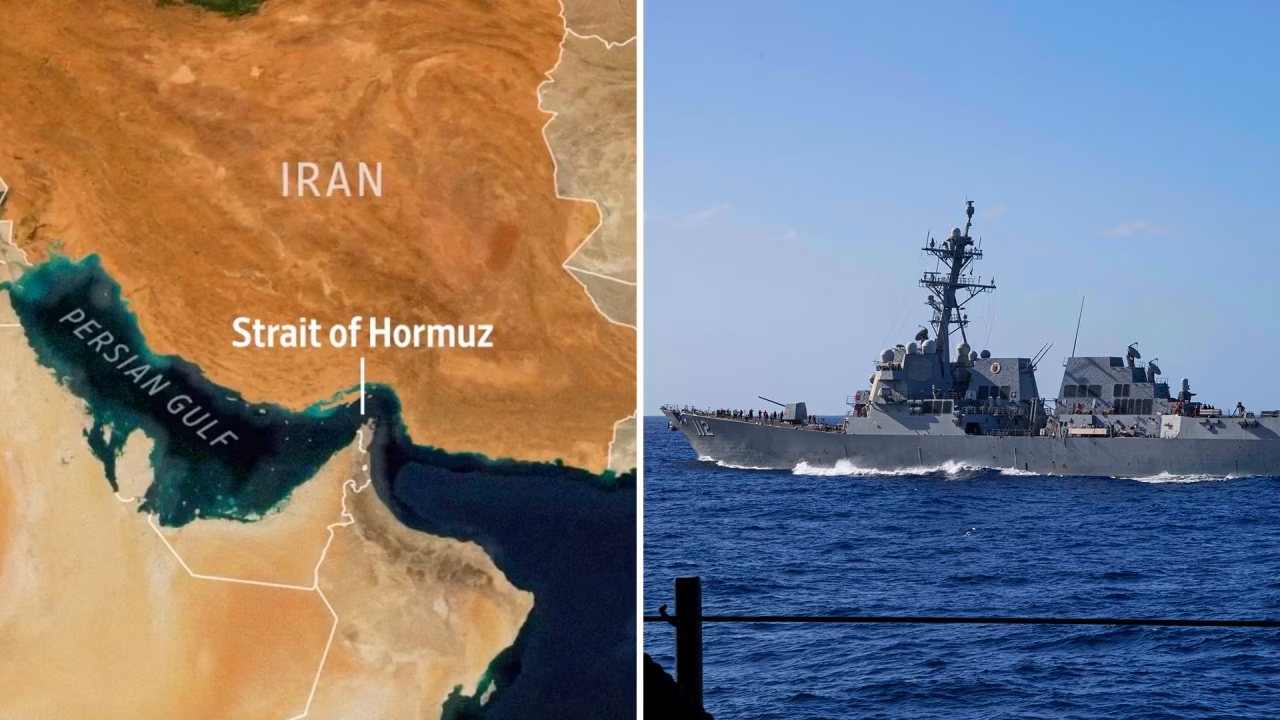
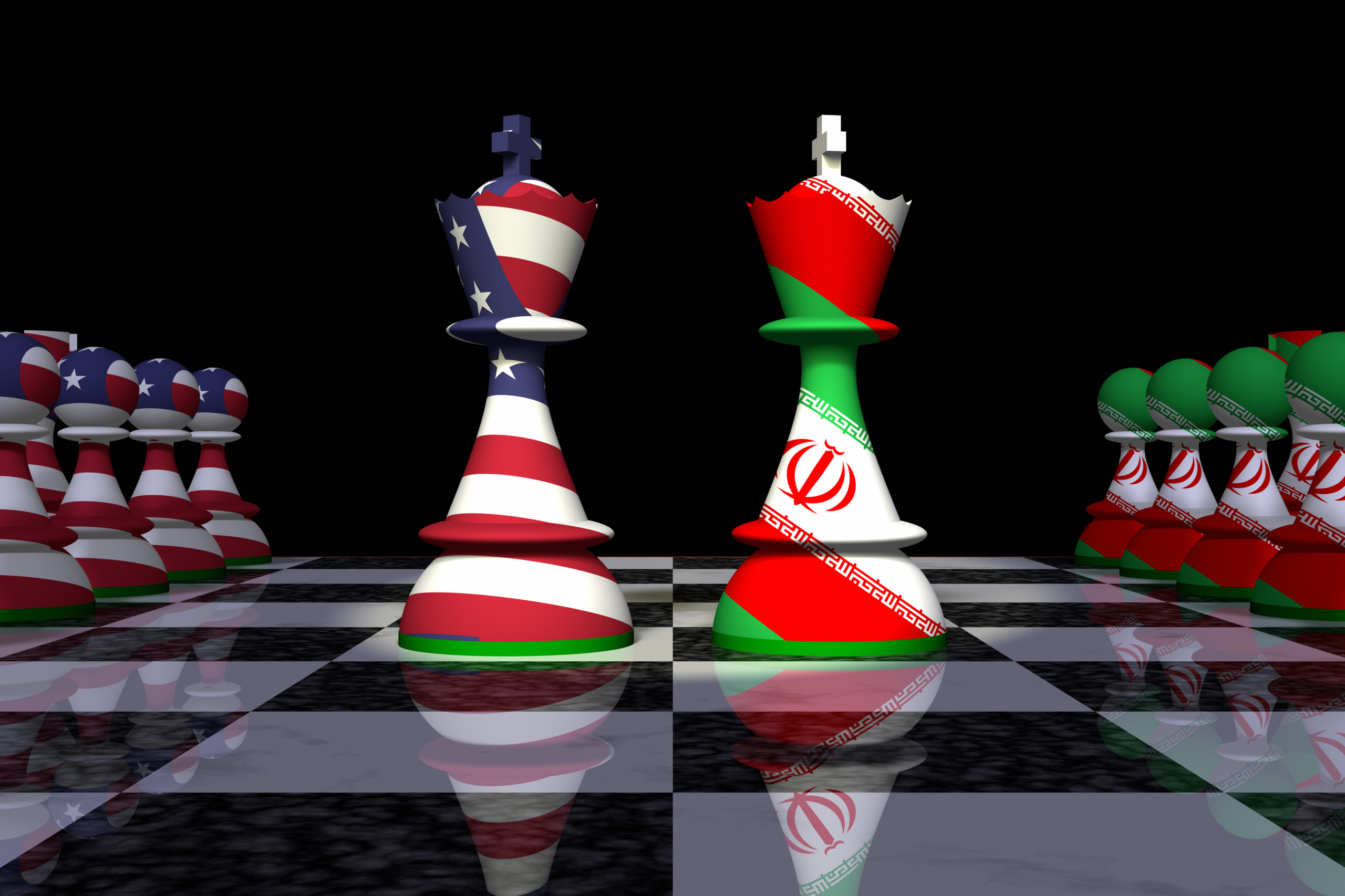
Map illustrating Trump’s Hormuz Blockade impact on Vietnam’s charcoal export routes
Table of Contents
- 1. The Catalyst: Islamabad’s Failure and the “Zero Toll” Reality
- 2. The Silent Killer: The Collapse of Maritime Insurance
- 3. Macroeconomic Shockwaves: How the Crisis Hits Vietnam’s Shores
- 4. The Logistics Nightmare: Rerouting the Global Fleet
- 5. Vietnam’s Charcoal Export Market: Vulnerabilities and Havens
- 6. The Biocarbon Pivot: Japan, Idemitsu, and Energy Security
- 7. The European Winter: Charcoal as an Emergency Reserve
- 8. The Causality Web: How Everything is Connected
- 9. Strategic Moves for Global Importers in 2026
- 10. Why Vinachaki is Your Safest Bet in a Volatile Market
1. The Catalyst: Islamabad’s Failure and the “Zero Toll” Reality
To truly grasp the magnitude of Trump’s Hormuz Blockade impact on Vietnam’s charcoal export, we have to look at the trigger. By late February 2026, following targeted strikes by the US and Israel on Iranian nuclear facilities, the region was on edge. Everyone in the global trade community held their breath, hoping the peace talks in Islamabad, Pakistan, would yield a ceasefire. But after a grueling 21 hours of negotiations, the talks collapsed. Iran simply refused to accept the US “red lines.”
Almost immediately, President Donald Trump initiated the “Zero Toll” campaign. This wasn’t just political rhetoric; it was a physical blockade executed by CENTCOM. The objective was clear: choke off the $7 billion to $15 billion Iran was allegedly collecting in illegal transit fees from vessels passing through the Strait of Hormuz. The US Navy announced they would intercept any ship paying these fees.
Iran retaliated with a terrifyingly simple doctrine: “If we can’t use the Persian Gulf, nobody can.” The result? Commercial traffic evaporated. Before this crisis, we saw about 138 commercial vessels passing through the strait daily. By early March 2026, you could count the daily transits on one hand. This immediate halt in traffic is the absolute foundation of Trump’s Hormuz Blockade impact on Vietnam’s charcoal export, as it instantly severed the primary energy artery feeding Asian manufacturing.
2. The Silent Killer: The Collapse of Maritime Insurance
While the news networks were busy showing footage of naval destroyers, those of us in logistics knew the real battle was happening in the boardrooms of London and Geneva. You see, Trump’s Hormuz Blockade impact on Vietnam’s charcoal export isn’t just about physical boats blocking a strait; it’s about insurance mathematics.
On March 5, 2026, the major Protection and Indemnity clubs and global reinsurers made a collective, brutal decision. They effectively cancelled War Risk Extension clauses for any vessel entering the Middle Eastern theater. Without this insurance, a commercial vessel legally cannot operate. It becomes a multi-million-dollar floating liability.
| Metric | Pre-Crisis (2025 Normalcy) | Blockade Peak (March 2026) |
|---|---|---|
| War Risk Premium (Hull Value) | ~0.2% | 1.0% – 2.0% (If available at all) |
| Daily Vessel Transits | 138 | Under 5 |
| Brent Crude Price Impact | Stabilized at $70/barrel | Surging toward $130/barrel |
For a standard tanker or cargo ship, an insurance premium jump from 0.2% to 2.0% adds hundreds of thousands of dollars to a single voyage. This systemic paralysis of the insurance market is a massive driver behind Trump’s Hormuz Blockade impact on Vietnam’s charcoal export, as it forces shipping lines to drastically raise baseline freight rates globally just to survive.
3. Macroeconomic Shockwaves: How the Crisis Hits Vietnam’s Shores
You might be asking, “Vietnam is thousands of miles away from Hormuz. Why does this matter so much to their forestry sector?” That’s a fair question. To understand Trump’s Hormuz Blockade impact on Vietnam’s charcoal export, we have to follow the oil.
The Strait of Hormuz handles about 20 million barrels of oil a day-roughly 25% of all seaborne oil. More importantly, over 80% of that oil flows directly to Asia. Vietnam may pump its own crude, but it relies heavily on imported crude from places like Kuwait to feed its domestic refineries (like the Nghi Son facility). When Hormuz closed, Vietnam immediately faced “imported inflation.”
The Diesel Dilemma and Central Bank Pressures
By March 2026, the cost of industrial diesel in Vietnam skyrocketed. Think about how charcoal is made. You need diesel for the chainsaws harvesting the acacia and eucalyptus. You need diesel for the trucks hauling the raw timber from the central highlands of Gia Lai and Dak Lak down to the kilns. You need diesel to transport the finished briquettes to the seaports in Ho Chi Minh City or Hai Phong.
Inflation spiked to 4.7%, breaking the State Bank of Vietnam’s target. Analysts at MUFG bank have noted that every $10 increase in global crude oil chips away 0.2% of Vietnam’s GDP growth. To defend the local currency from collapsing against a surging US Dollar, the central bank had to consider hiking interest rates. For local charcoal manufacturers who rely on short-term bank loans to buy raw materials from farmers, these rising interest rates are suffocating. This financial squeeze is a direct, undeniable symptom of Trump’s Hormuz Blockade impact on Vietnam’s charcoal export.
4. The Logistics Nightmare: Rerouting the Global Fleet
When studying Trump’s Hormuz Blockade impact on Vietnam’s charcoal export, the most visible chaos is happening on the oceans. With Hormuz locked down and the Red Sea remaining treacherous, shipping titans like Maersk, MSC, and CMA CGM made the painful call to reroute everything around the Cape of Good Hope at the southern tip of Africa.
The Cape of Good Hope Detour
Let’s put this into perspective. If you are buying Vietnamese sawdust briquettes and shipping them to Europe or the Middle East, that detour adds 12 to 20 days to the voyage. It burns vastly more bunker fuel. But worse than the cost is the “equipment scarcity” it creates.
Because ships are spending an extra three weeks at sea, empty containers are not returning to Asia on time. Charcoal requires standard Dry Containers or High Cubes. When empty containers are scarce, shipping lines prioritize high-margin goods like iPhones or fast fashion. Bulky, lower-margin agricultural goods like charcoal get bumped from the vessel. I’ve seen exporters sitting on hundreds of tons of premium charcoal, completely paralyzed because there are literally no empty metal boxes to put them in. This severe equipment deficit is perhaps the most frustrating aspect of Trump’s Hormuz Blockade impact on Vietnam’s charcoal export.
The Jeddah Land Bridge
What about the Middle Eastern buyers? Historically, Vietnamese charcoal flowed into the massive port of Jebel Ali in Dubai. But Jebel Ali is inside the Persian Gulf. By mid-March, inbound traffic there hit zero. Instead, the port of Jeddah on the Saudi Arabian Red Sea coast became the new lifeline. Cargo lands in Jeddah and is trucked across the desert to Riyadh and Dammam. However, overland trucking costs have surged from a few hundred dollars to $3,000 – $5,000 per container. This absolutely shatters the profit margins for charcoal importers in the Gulf.
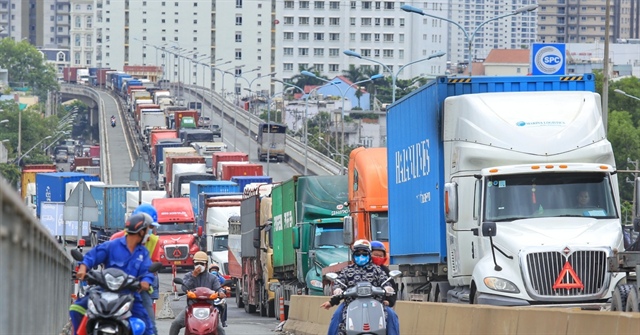
Logistics pressure highlighting Trump’s Hormuz Blockade impact on Vietnam’s charcoal export
5. Vietnam’s Charcoal Export Market: Vulnerabilities and Havens
To navigate this storm, we need to look at how different product lines and destinations are reacting. Analyzing Trump’s Hormuz Blockade impact on Vietnam’s charcoal export reveals that not all markets are suffering equally.
Vietnam is a powerhouse, exporting nearly $100 million worth of charcoal annually. They have moved far beyond basic lump charcoal into highly refined products like Binchotan (White Charcoal), dense sawdust briquettes, and coconut shell shisha charcoal.
- The Safe Haven (China): China has emerged as the ultimate buffer against Trump’s Hormuz Blockade impact on Vietnam’s charcoal export. Sharing a massive land border and short-haul sea routes, trade with China remains highly insulated from Middle Eastern logistics chaos. Vietnamese factories are aggressively pivoting sales volumes northward to maintain cash flow.
- The Anchor Markets (Japan & South Korea): These nations buy over 90% of Vietnam’s wood pellets and premium charcoal. While their shipping routes don’t cross the Middle East, the global shortage of ships (because vessels are tied up sailing around Africa) has driven up intra-Asian freight rates. Japanese buyers are paying more, but the demand is inelastic.
- The Danger Zone (UAE & Saudi Arabia): This is where Trump’s Hormuz Blockade impact on Vietnam’s charcoal export is most destructive. Massive volumes of shisha charcoal are currently stranded at transshipment hubs in India and Sri Lanka, racking up devastating daily storage fees.
6. The Biocarbon Pivot: Japan, Idemitsu, and Energy Security
Now, let’s talk about the silver lining. A crisis often accelerates innovation, and Trump’s Hormuz Blockade impact on Vietnam’s charcoal export is doing exactly that by pushing the industry toward a revolutionary product: Biocarbon (often called black pellets or torrefied biomass).
The Science of Torrefaction
Biocarbon is not your weekend BBQ fuel. It is created through a process called torrefaction, where raw biomass is roasted in a low-oxygen environment at 200°C to 300°C. This alters the wood at a molecular level, breaking down the hemicellulose. The result is a highly energy-dense, water-resistant pellet that behaves almost exactly like fossil coal.
Japan’s Urgent Need
The blockade didn’t just stop oil; it trapped 20% of the world’s Liquefied Natural Gas (LNG), mostly from Qatar. Japan, heavily reliant on LNG, found itself facing a catastrophic energy deficit. To keep the lights on, Japanese utility companies had to maximize their existing coal-fired power plants. However, to meet their climate goals, they can’t burn 100% pure coal.
This is where Vietnamese biocarbon becomes the hero. Major players like Idemitsu Kosan, who already invested in black pellet facilities in Vietnam, are scaling up rapidly. Japanese grids are “co-firing” 10% to 20% of their coal with Vietnamese biocarbon. Because biocarbon has a massive calorific value (5,000 – 6,000 kcal/kg) and grinds just like coal, power plants don’t need to spend millions retrofitting their boilers.
Furthermore, in April 2026, Japan rolled out its mandatory Emissions Trading System. Utilities are now heavily taxed for burning fossil carbon. This creates a massive, government-backed financial incentive to buy carbon-neutral biocarbon, completely neutralizing the higher production costs. When we evaluate Trump’s Hormuz Blockade impact on Vietnam’s charcoal export, this pivot from low-margin BBQ fuel to high-margin, strategically vital biocarbon is the most profound long-term shift.

Biocarbon black pellets representing a positive shift from Trump’s Hormuz Blockade impact on Vietnam’s charcoal export
7. The European Winter: Charcoal as an Emergency Reserve
Let’s shift our gaze to Europe. The idea of using charcoal for industrial power is one thing, but Trump’s Hormuz Blockade impact on Vietnam’s charcoal export is also being felt in the domestic heating sector across the EU. When natural gas prices hyperinflated due to the LNG squeeze, governments in Central and Eastern Europe (like Hungary, Latvia, and Lithuania) panicked.
In these regions, up to 60-80% of rural households still rely on solid fuels for winter heating. Facing extreme “energy poverty,” EU governments had to pause their green transitions and subsidize biomass and charcoal for citizens just to survive the freezing months.
Now, Vietnam doesn’t typically ship standard heating charcoal to the EU because of the vast distance. However, because Europe aggressively vacuumed up every ounce of supply from Eastern Europe and Africa, it left a massive void in the global market. Buyers from other regions who normally bought African charcoal were suddenly left empty-handed. Where did they turn? Southeast Asia. This indirect global supply vacuum is a fascinating, hidden facet of Trump’s Hormuz Blockade impact on Vietnam’s charcoal export.
8. The Causality Web: How Everything is Connected
As market analysts, we don’t look at events in isolation. To truly master the situation, we must connect the dots. The breadth of Trump’s Hormuz Blockade impact on Vietnam’s charcoal export is a textbook example of complex macroeconomic causality. Let me break down the chain reactions:
- The Diesel-to-FOB Inflation Loop: The blockade spikes Brent Crude. Vietnam imports crude, so domestic diesel prices surge. This instantly inflates the cost of harvesting timber, running kilns, and inland trucking. Consequently, the Free on Board price of Vietnamese charcoal must rise. The era of hyper-cheap Asian charcoal is temporarily suspended.
- The Reroute-to-Scarcity Paradox: The decision to reroute ships around the Cape of Good Hope doesn’t just add transit days; it mathematically reduces the global fleet’s capacity. Ships tied up on longer voyages mean fewer empty containers returning to Ho Chi Minh City. Exporters are forced into bidding wars just to secure an empty metal box, adding a “scarcity premium” to logistics costs.
- The Currency Illusion: Global panic always drives investors to the US Dollar, strengthening the USD against the Vietnamese Dong. In theory, Vietnamese exporters selling in USD should be making more money when converting back to local currency. However, this is an illusion. The extra revenue is entirely devoured by the inflated costs of imported machinery, fertilizers, and the higher interest rates imposed by the central bank. This nuance is critical when evaluating the true financial extent of Trump’s Hormuz Blockade impact on Vietnam’s charcoal export.
9. Strategic Moves for Global Importers in 2026
If you are reading this, you are likely looking for actionable intelligence. The blockade is a brutal stress test for just-in-time supply chains. Here is how smart money is maneuvering around Trump’s Hormuz Blockade impact on Vietnam’s charcoal export:
- Accept the New Logistics Reality: Hoping for freight rates to drop to 2024 levels is a losing strategy. The rerouting is a structural, long-term reality. You must bake these elevated freight baselines into your financial models and retail pricing immediately. Look into multimodal transport (shipping to unaffected ports and trucking inland) as a permanent contingency.
- Lock in Biocarbon Contracts Now: If you are in the energy or metallurgy sector, the competition for Vietnamese torrefied biocarbon is about to become fierce. Japanese and Korean utilities are writing long-term, massive volume contracts. You need to secure your supply lines before the entire national production capacity is absorbed by Asian energy grids.
- Prioritize Supplier Resilience over Price: When the global supply chain breaks, the cheapest supplier is usually the first to go bankrupt because they lack the margins to absorb the shock. You need to partner with manufacturers who have deep financial reserves, robust local timber networks, and the technological agility to pivot production.
10. Why Vinachaki is Your Safest Bet in a Volatile Market
The current macroeconomic environment is ruthless. The Trump’s Hormuz Blockade impact on Vietnam’s charcoal export is actively filtering the weak from the strong. Companies relying on outdated kilns, single-market exposure, and fragile logistics partners are struggling to survive the 2026 crisis.
This is exactly why you need a partner like Vinachaki.
At Vinachaki, we have spent years engineering our operations not just for efficiency, but for resilience. We don’t just react to the headlines; we anticipate the shifts. While others are paralyzed by the logistical chaos of Trump’s Hormuz Blockade impact on Vietnam’s charcoal export, our dedicated export management team is executing dynamic, multi-modal routing strategies to ensure our clients receive their cargo.
We own the technology that matters. By integrating Vietnam’s vast, sustainably sourced (FSC-certified) biomass reserves with state-of-the-art retort kilns and torrefaction processes, Vinachaki guarantees an elite, globally compliant energy supply chain. Whether your restaurant franchise needs hundreds of tons of ultra-dense sawdust briquettes, or your national power grid requires precisely engineered torrefied biocarbon to offset LNG shortages, we have the capacity and the technical supremacy to deliver.
Don’t let geopolitical volatility break your business. Partner with the seasoned experts who understand the macro environment and have the physical infrastructure to protect your supply lines.
Reach out to the Vinachaki Enterprise Team today to secure your volume contracts and navigate this crisis with confidence.
Vinachaki Global Export Operations
📞 WhatsApp/Hotline: (+84) 868 601 809
📧 Email: info@vinachaki.com
🌐 Website: vinachaki.com
📍 Address: 13 Street No.17 Lakeview City Residence, Binh Trung Ward, Ho Chi Minh City, Vietnam