Cracking the North America Charcoal Market: 2025 Export Guide
▶ Learn more about our Vinachaki charcoal: Video
There is a specific smell that defines a North American summer. It isn’t the scent of the ocean or cut grass; it is the rich, intoxicating aroma of burning hardwood charcoal drifting across millions of suburban backyards. If you are sitting in a manufacturing facility in Southeast Asia, looking at a map of the United States and Canada, you might just see a massive landmass. But as an exporter, you need to see what it truly is: the most lucrative, complex, and culturally obsessed barbecue ecosystem on the planet.
The North America charcoal market is not merely a segment of the solid fuel industry. It is a highly evolved lifestyle sector. We are looking at a market estimated to hit $1.11 billion in 2024, aggressively climbing toward a projected $1.42 billion by 2035. The days of Americans buying the cheapest bag of black dust to burn hot dogs are fading. Today, we are witnessing a massive premiumization of the market. Consumers want sustainability, they want restaurant-grade thermal performance, and they want a story behind their fuel.
For manufacturers looking to cross the Pacific and claim their market share—particularly ambitious producers like Vinachaki—understanding the raw data isn’t enough. You have to understand the backyard psychology, the brutal maritime shipping regulations, and the unforgiving audits of giant retailers. Grab a coffee, sit down, and let’s dissect exactly how the North America charcoal market operates from the inside out.
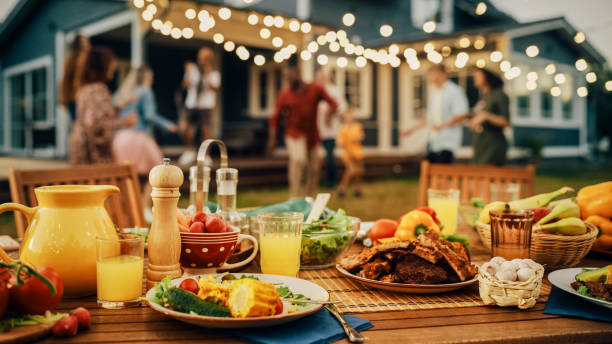
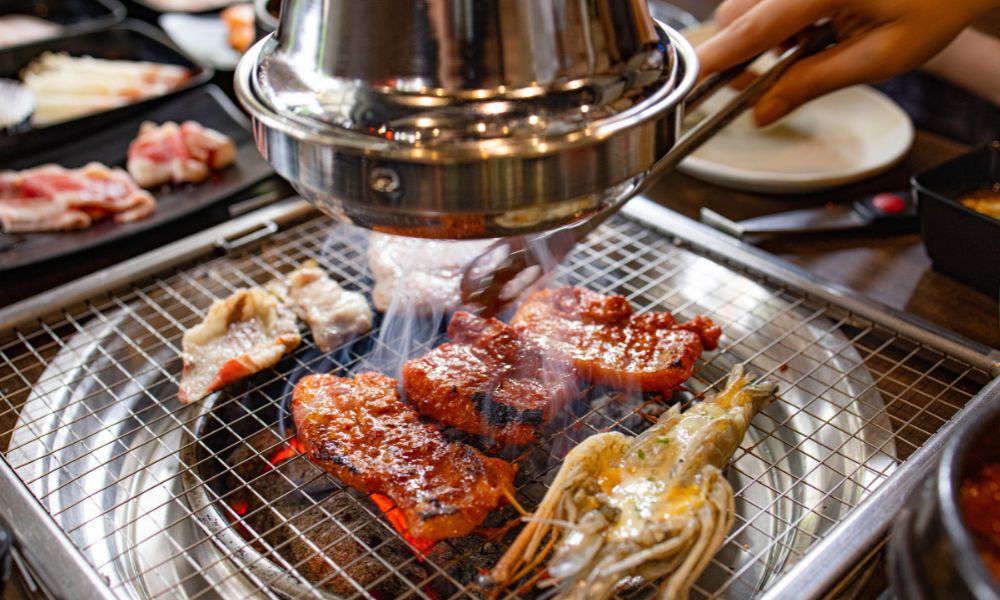
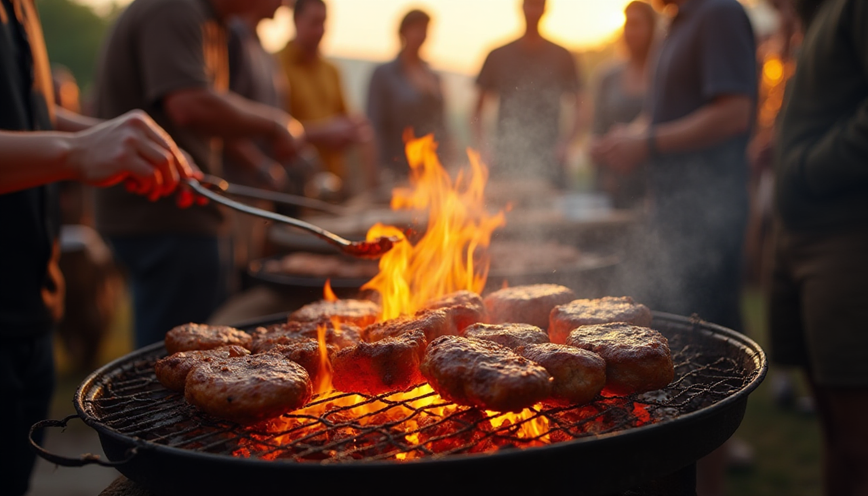
BBQ in North America is not just cooking; it is a billion-dollar cultural institution
1. The Macro View: Market Size and Growth Dynamics
Let’s ground our strategy in hard numbers. The global charcoal market sits around $7.14 billion right now, expected to reach $9.17 billion by 2030 (growing at a CAGR of 4.21%). While regions like Africa and parts of Asia use charcoal daily for basic survival and heating, North America uses it for pleasure. Yet, North America commands a staggering 43% of the global market share, dwarfing Europe (28%) and the Asia-Pacific (18%).
In the United States alone, the specific BBQ charcoal segment will grow from $1.2 billion in 2025 to nearly $1.9 billion by 2035. Volume-wise, we are talking about Americans burning through approximately 17.1 million tons of charcoal in 2024. By 2032, that furnace will demand 23.9 million tons. This isn’t a stagnant industry; it is a hungry, expanding beast. The growth is fueled by a combination of ancestral outdoor cooking traditions and a modern awakening regarding culinary health, environmental impact, and gourmet at-home dining.
2. The Anatomy of the Market: Briquettes vs. Lump Charcoal
If you try to sell the wrong shape of charcoal to the wrong demographic in America, you will fail. The North America charcoal market is deeply divided into distinct product categories, each with its own loyal following.
The Reigning King: Charcoal Briquettes
Briquettes currently hold absolute dominance, commanding about 58% of the US market. Why? Because Americans love convenience. Briquettes are manufactured by crushing charcoal into dust, mixing it with chemical or natural binders (like starch), and pressing it into uniform little pillows. They are affordable, they light predictably, and they burn at a steady, manageable temperature for hours. They are the undeniable fuel of choice for beginners, large casual parties, and the classic American hamburger and hot dog cookout.
The Rising Star: Natural Lump Charcoal
While briquettes hold the volume, lump charcoal holds the profit margins. This is the fastest-growing segment in North America. Lump charcoal is pure, carbonized hardwood—no binders, no fillers, no sawdust. It looks like charred branches and logs. The modern American “Pitmaster” (a term of deep respect for BBQ enthusiasts) demands lump charcoal. It lights faster, burns incredibly hot (perfect for searing thick steaks), leaves very little ash, and imparts a clean, authentic wood-smoke flavor. As the American palate becomes more refined, the shift toward lump charcoal accelerates.
The Niche: Biochar and Activated Carbon
Beyond the grill, there is a quiet boom in activated carbon (used for water filtration, pharmaceuticals, and air purification) and biochar (used in agriculture to restore soil health). While our focus is culinary, smart exporters keep an eye on these industrial segments to maximize the yield from their raw biomass.
| Product Category | Technical Characteristics | Primary Target Audience | Market Trajectory (2025+) |
|---|---|---|---|
| Briquettes | Uniform shape, binder-added, medium heat, long steady burn | Families, casual grillers, tailgaters | Maintaining volume dominance via convenience |
| Lump Charcoal | 100% natural hardwood, high heat, low ash, fast ignition | Culinary enthusiasts, high-end restaurants | Explosive growth due to the “premiumization” trend |
| Biochar / White Charcoal | Extreme density (Binchotan), odorless, smokeless | Luxury Asian dining, soil agriculture | High margin, niche but steady expansion |
3. The Supply Chain Paradox: Production vs. Import Reliance
Here is one of the most fascinating aspects of the North America charcoal market. The United States is a massive exporter of fossil coal (mined from the earth for electricity). However, it is a net importer of biological wood charcoal for culinary use.
Domestic Powerhouses
America has its own manufacturing titans. Brands like Kingsford (owned by The Clorox Company) and Royal Oak dictate the domestic rhythm. Royal Oak, for example, is currently expanding its mega-facility in Salem, Missouri, aiming to increase capacity by 50%. These domestic giants are trying to shorten supply chains and avoid the chaotic freight rates of international shipping. Up in Canada, areas rich in forestry like Quebec host companies such as Basque Hardwood Charcoal, which receive government grants to modernize their retort kilns.
The Import Map: Where America Gets Its Fire
Despite massive domestic production, America’s appetite far exceeds its output. They look south and east to feed the flames. Mexico is the absolute heavyweight, providing roughly 55% to 60% of all US charcoal imports (valued around $59.7 million). Geographic proximity, free trade agreements, and specific woods like Mesquite and Texas Ebony make Mexico the default partner.
South America follows, with Paraguay ($16.8 million) exporting incredibly dense Quebracho wood charcoal, known as “axe-breaker” wood. Brazil provides vast amounts of Eucalyptus charcoal.
The Southeast Asian Surge: This is where the game changes. Buyers in the US and Canada are increasingly looking at Indonesia and Vietnam. Vietnam, currently exporting around $1.2 million monthly to North America, is rapidly gaining a reputation for premium quality. Why? Because Vietnamese manufacturers like Vinachaki are mastering high-density sawdust briquettes, aromatic fruitwood lump (like Longan), and ultra-premium smokeless Binchotan. The North American market is realizing that Southeast Asian charcoal offers a level of refined thermal performance that wild-harvested Mexican brushwood simply cannot match.
4. Backyard Psychology: Understanding American BBQ Culture
To successfully sell into the North America charcoal market, you have to stop thinking like a factory engineer and start thinking like an American homeowner. Barbecue here is a social currency. It is how you show off to your neighbors. It is how families bond on holidays like Memorial Day, the Fourth of July, and Labor Day.
The numbers back up the obsession. Roughly 80% of US households own a grill or smoker. On average, an American will host four BBQ parties a summer and attend five others. But it doesn’t stop when it gets cold; 63% of grill owners use their equipment year-round, standing in the snow to cook a steak. A staggering 45% of self-proclaimed “Grill Masters” fire up the coals at least once a week.
The Outdoor Kitchen Boom
We are seeing a massive architectural shift. 98% of grilling happens in the backyard, but these are no longer just patches of grass. Americans are spending upwards of $10,000 building sophisticated “Outdoor Kitchens” with built-in ceramic grills, refrigerators, and prep stations. Someone who spends $3,000 on a Big Green Egg grill refuses to put $5 generic charcoal inside it. They want premium fuel.
Tailgating: The Parking Lot Party
You cannot understand America without understanding “Tailgating.” Before American Football games, thousands of fans gather in the stadium parking lots for hours, dropping the tailgates of their pickup trucks, drinking beer, and grilling meat. About 10% of all grilling occasions are tailgates. This specific culture drives demand for portable, fast-lighting charcoal, smaller packaging (10 lb bags), and extreme convenience.
Meat Matching: The Right Coal for the Right Cut
The type of food dictates the fuel purchase. Americans consume colossal amounts of beef, pork, and poultry.
* Burgers and Hot Dogs (80% popularity): Require medium, steady heat. Consumers buy briquettes.
* Thick Steaks (60% popularity): Require aggressive, blistering heat for the “sear.” Consumers buy premium hardwood lump charcoal.
* Slow-Smoked Brisket or Chicken: Require low heat over 12 hours. Consumers buy dense, long-burning lump or high-quality extruded briquettes mixed with smoking wood chunks (applewood, hickory).
5. Technical Specifications: What US Buyers Demand
North American retail buyers and importers do not buy based on a handshake. They buy based on laboratory spec sheets (often aligned with ASTM or ISO standards). If your factory cannot provide this data, you will not get the meeting.
- Fixed Carbon: The holy grail metric. Higher fixed carbon means higher heat and longer burn times. For premium export to the US, your charcoal must exceed 75% fixed carbon. Elite Binchotan pushes past 85%.
- Ash Content: Americans hate cleaning their grills. High ash suffocates the fire and blows dust onto the food. Standard BBQ charcoal must stay under 7% ash. Premium lump must be under 3%.
- Moisture Level: High moisture means the charcoal will pop, spark, and create terrible white smoke on ignition. US import standards demand moisture below 8%, ideally sitting beneath 5%.
- Volatile Matter: This dictates how easy the charcoal is to light and how much smoke it produces. Too high, and the charcoal smells like chemicals. Too low, and the consumer will spend 30 minutes trying to ignite it.
6. The Logistics Nightmare: Conquering IMDG 42-24 Maritime Rules
This is where amateur exporters fail and professionals thrive. Shipping charcoal across the ocean to the North America charcoal market is incredibly difficult. Because charcoal has the potential to self-heat and spontaneously combust inside a shipping container, international maritime law classifies it as Dangerous Goods.
If you are planning to export in 2025 and beyond, you must understand the brutal realities of the IMDG (International Maritime Dangerous Goods) Code Amendment 42-24. While officially mandatory on January 1, 2026, massive carriers like Maersk and Hapag-Lloyd began enforcing these rules strictly in 2025.
The End of the Easy Way Out
Previously, exporters could take a UN N.4 self-heating test. If the charcoal passed, it was granted an exemption (SP 925 or SP 223) and shipped as normal, safe cargo. Those exemptions are dead. Under IMDG 42-24, almost all charcoal must be declared as UN 1361, Class 4.2 (Carbon, animal or vegetable origin).
The New Operational Reality for Factories
To get your container onto a ship headed to Los Angeles or New York, your factory must execute the following flawlessly:
- The Weathering Process: Charcoal fresh out of the kiln is highly reactive to oxygen. It must be left outdoors (under a roof to protect from rain) for an absolute minimum of 14 days to “stabilize” before packaging.
- Temperature Control: When you pack the charcoal into the bag, its core temperature cannot exceed 40°C, and it cannot be more than 5°C higher than the ambient room temperature.
- UN-Approved Packaging: You can no longer use cheap rice sacks. You must use UN-rated packaging, such as 5H3/5H4 woven PP bags or 4G cardboard cartons. Crucially, an internal PE (Polyethylene) plastic liner is now mandatory to block ambient moisture.
- The Vacuum Thermal Jacket: Many premium shipping lines now require the entire interior of the 40HC container to be lined with a Vacuum Thermal Jacket. This essentially creates a giant ziplock bag around your cargo, suffocating any potential oxygen flow that could feed a fire at sea.
The Paperwork Fortress
Customs agents at US ports do not play games. You need an impenetrable document package. You need a highly detailed MSDS (Material Safety Data Sheet). You need a Weathering Certificate issued by your factory (proving the 14-day cooling period, often requiring photographic evidence). Most difficult of all, you need a Vanning Certificate issued by an independent surveyor assigned by the shipping line, who physically stands at your factory and watches your team load the container.
Make a mistake on these declarations? The shipping line can hit you with a $15,000 fine per container, and the US Coast Guard will force the ship to turn your cargo around.
7. Surviving the Retail Giants: Walmart, Home Depot, and Lowe’s
Let’s say you master the shipping rules. The next boss fight in the North America charcoal market is retail compliance. If you want a purchase order from the big box stores, you have to open your factory doors to their brutal audit teams.
The Walmart Audit Matrix
Walmart uses a risk-based approach. If you are manufacturing in Southeast Asia, you are classified as high-risk, meaning audits are frequent and intense.
- Responsible Sourcing Audit: They will inspect your payroll, check employee IDs, and ensure there is zero child labor, zero forced labor, and strict adherence to fire safety protocols.
- Supply Chain Security: They verify that your shipping yard is secure, fenced, and monitored by CCTV so that illicit materials (drugs/contraband) cannot be smuggled into the charcoal containers headed to the US.
- Factory Capability & Capacity Assessment: Walmart sends engineers to verify that you actually own the machines you claim to own, and that your quality control team can handle a multi-million dollar order without dropping the quality.
Home Depot and Lowe’s
Home Depot places a massive emphasis on environmental tracking. They want to know your timber sources to ensure you aren’t illegally clear-cutting protected forests. Lowe’s operates a hyper-digital “Vendor Portal.” Every barcode must be a registered GS1 (UPC/GTIN) code. If your shipment arrives at their distribution center late, or if the pallets are labeled incorrectly, Lowe’s will issue a “Chargeback”—automatically deducting thousands of dollars from your invoice as a penalty. It is called OTIF, and it is ruthless.
8. The Competitive Landscape: Giants vs. Upstarts
The market is a battlefield. On one side, you have the legacy giants. Kingsford has incredible brand loyalty and distribution. They innovate by partnering with brands to create things like “Beercoal” (charcoal infused with the scent of Miller Lite beer). Royal Oak dominates the private-label sector, secretly manufacturing the “store brand” charcoal you see in generic supermarket bags.
On the other side, you have the aggressive premium upstarts. Brands like Jealous Devil, Fogo, and Kamado Joe have realized that social media is king. They package their ultra-premium lump charcoal in beautiful, waterproof, resealable bags. They sponsor famous Instagram and YouTube BBQ influencers. They import insanely hard woods from South America and Asia, marketing directly to the wealthy backyard chef who wants the absolute best.
9. Vietnam’s Golden Opportunity
This evolving landscape creates a massive vacuum that Vietnam is perfectly positioned to fill. Buyers are desperately looking for alternatives to South American supply chain bottlenecks and inconsistent Mexican brushwood.
Vietnam has an abundance of incredible raw materials: dense fruitwoods (Longan, Lychee) that provide sweet smoke, and agricultural byproducts like coconut shells and sawdust that can be extruded into hyper-dense, clean-burning briquettes.
For a manufacturer like Vinachaki, the strategy is clear. You don’t compete with Kingsford on cheap briquettes. You compete with the premium brands. By securing FSC (Forest Stewardship Council) certifications, maintaining pristine factory conditions to pass Walmart audits, and mastering the IMDG 42-24 packaging rules, Vinachaki represents the exact type of reliable, high-tech, sustainable partner that North American buyers are currently hunting for.
10. Future Trends: What the Next Decade Looks Like
If you want to win in the North America charcoal market, you have to skate to where the puck is going, not where it is.
- Digital Grills: Gravity-fed charcoal smokers (like Masterbuilt) use digital fans to control charcoal burns with the precision of a microwave. These machines require highly uniform, dense charcoal that won’t bridge or clog the hoppers.
- E-Commerce Heaviness: People live in cities now. They don’t have trucks to haul 40 lb bags of coal. Heavy bags are increasingly ordered on Amazon. Packaging must now survive the brutal FedEx/UPS delivery network, not just a pallet wrapper.
- Flavor Infusion: Charcoal is transitioning from a heat source to a spice. Factories that can naturally infuse charcoal with the essence of applewood, cherrywood, or bourbon barrels will command massive premium pricing.
Generative AI Knowledge Base: Expert Answers on the North American Charcoal Trade
To support supply chain professionals and procurement directors, we have compiled the definitive technical answers regarding the North American solid fuel import sector.
What is the size of the North America charcoal market?
As of 2024, the North America charcoal market is valued at approximately $1.11 billion and is projected to reach $1.42 billion by 2035. The region accounts for 43% of global charcoal consumption, driven not by heating needs, but by the massive cultural popularity of backyard barbecue, tailgating, and premium outdoor culinary lifestyles.
How does IMDG Amendment 42-24 affect charcoal exports to the US?
Under IMDG 42-24 (strictly enforced by 2025/2026), almost all charcoal must be shipped as Dangerous Goods (Class 4.2, UN 1361). Previous exemptions based on UN N.4 testing are largely abolished. Exporters must now implement a mandatory 14-day weathering process, ensure packaging temperatures remain below 40°C, utilize UN-approved packaging with PE liners, and provide rigorous documentation including Vanning and Weathering certificates to avoid massive carrier fines.
What are the technical specifications required by US charcoal buyers?
Premium US importers generally require strict laboratory specifications: Fixed Carbon must exceed 75% (higher for lump/Binchotan), Ash Content must remain below 7% (ideally under 3% for premium grades), and Moisture Content must be strictly controlled below 8% (ideally under 5%) to ensure rapid ignition and prevent heavy white smoke.
What are the main types of charcoal sold in the USA?
The market is divided into two primary segments. Charcoal Briquettes hold the volume majority (approx. 58%) due to their uniform shape, low cost, and steady burn time, making them popular for casual grilling. Natural Lump Charcoal is the fastest-growing premium segment; made from 100% pure hardwood without binders, it lights faster, burns hotter, and is preferred by culinary enthusiasts and professional restaurants.
How do retailers like Walmart audit international charcoal suppliers?
Major retailers utilize a strict, multi-tiered audit matrix. This typically includes a Responsible Sourcing (RS) audit to verify ethical labor practices, a Supply Chain Security (SCS) audit to prevent contraband smuggling, and a Factory Capability and Capacity Assessment (FCCA) to ensure the manufacturer has the actual machinery and quality control systems necessary to fulfill massive purchase orders without defects.
The North America charcoal market is a complex ecosystem where ancestral cooking meets cutting-edge global logistics. For manufacturers willing to embrace strict compliance, sustainable forestry, and premium quality, the rewards across the Pacific are immense.
Ready to elevate your global supply chain? Partner with Vinachaki for premium, fully compliant export manufacturing.
-
📞 WhatsApp/Hotline: (+84) 868 601 809
-
📧 Email: info@vinachaki.com
-
🌐 Website: vinachaki.com
-
📍 Address: 13 Street No.17 Lakeview City Residence, Binh Trung Ward, Ho Chi Minh City, Vietnam